


Has anyone else encountered this problem? A search for Palm Meadows, Bangalore, brings up the following link:
www.pkblogs.com/blogpourri/2007/07/life-in-palm-meadows-bangalore-view.html
and when you click on it, it brings up my page with that post, but with Pkblogs' ads framing my page. There are other links to more of my posts via Pkblogs and Inblogs. SIFY used to do this to all my posts a year or so ago until I called and told them to knock it off.
If you have encountered this problem, please could you tell me what you did to stop it?
It makes me mad because Pkblogs and Inblogs are trying to make money off of other peoples' work merely by framing pages with their ads.
Monday, August 20, 2007


Friday, August 17, 2007
Indian Schools: ICSE or CBSE? International or Mainstream?
If you are a parent looking to move to India and are confused about the choices available in terms of schooling for your children, this article in this weekend's Mint Lounge offers you a good overview:
My posts on Bangalore schools are here (more posts are linked within each post).
It’s a subject all parents obsess about: schools. How few good ones there are and how to get their children into them. The International Baccalaureate (IB) or the Indian School Certificate Examinations (ICSE)? How to make it to South Mumbai’s Cathedral & John Connon School (Maureen’s Head Start playschool is the way), or Campion, or J.B. Petit School.
Or, should you just skip those traditional schools that are stressful, competitive and ramshackle and opt instead for that growing set of new schools which come with an “international” tag? There are plenty of options: The number of Indian schools offering the University of Cambridge International Examinations (CIE) has grown by three times in as many years to almost 200, while 37 outfits offer the IB programme.
My posts on Bangalore schools are here (more posts are linked within each post).
When the sky threatens to fall, you dig deep
I read two stories today from people half way around the globe from each other, but each one resonated for the same reasons. They are gut-wrenching stories of adversity that befalls ordinary people and, more importantly, they are stories of ordinary people digging deep within themselves to find the emotional wherewithal to surmount the adversity.
There is this story of Sadhika, a four year-old, who was diagnosed with cancer a year ago (via Uma).
Please do take time to read both the stories.
There is this story of Sadhika, a four year-old, who was diagnosed with cancer a year ago (via Uma).
Both Rajni and I were numb. We went back home and shut ourselves inside for three days. During the second counselling session at aiims we were told that the whole department was with us. The estimated cost for the three-year course of treatment was Rs 7.5 lakh. We were cautioned that there could be a relapse after five or six years.Then there is Jana Lee's story. Frail and sick, she finds solace in simple things - planting some seeds and watching them take root and come alive.
One night soon afterwards, my wife and I sat together and cried out loud. How could God do this to us? Then Rajni reassured me. She said we had to try and do our best to save Sadhika. We decided we would strive together. It was a cathartic moment. We sensed God’s will behind it all. Maybe it was part of God’s master plan for us.
We then informed our friends and family. We did not want to hide anything from anyone, in part because we also saw this as an opportunity to generate awareness about blood cancer. We told Pulkit that his little sister had a blood infection and we would all have to work hard to help her become well again. The reactions from those we knew were mixed. Some supported us; others told their children to stop playing with Sadhika.
But we were undeterred. I work for a private firm, and they supported me and granted me leave whenever I needed it. Rajni’s family, and my sisters and their families supported us and were always ready to donate blood.
Everything is so simple when you've been sick. To be outside wearing the sun as a shawl when your heart has been so cold for so long is a gift. To think of the ground as a womb and no longer as a grave is a relief. Kneeling to pull weeds and sift the soil becomes each day an excuse to pray. Night crawlers glisten in my fingers fiery red and as valuable as rubies, eyeless and innocent of their importance to prepare the earth for the growing of plants. I watch robins pulling them from deep, secret places beyond the garden's edge, sensing the movements of the worms underground with their feet. I knead dirt for hours like a baker working dough.In adversity, there is hope.
Please do take time to read both the stories.
Travel: Open Air Markets - What's Not to Love?
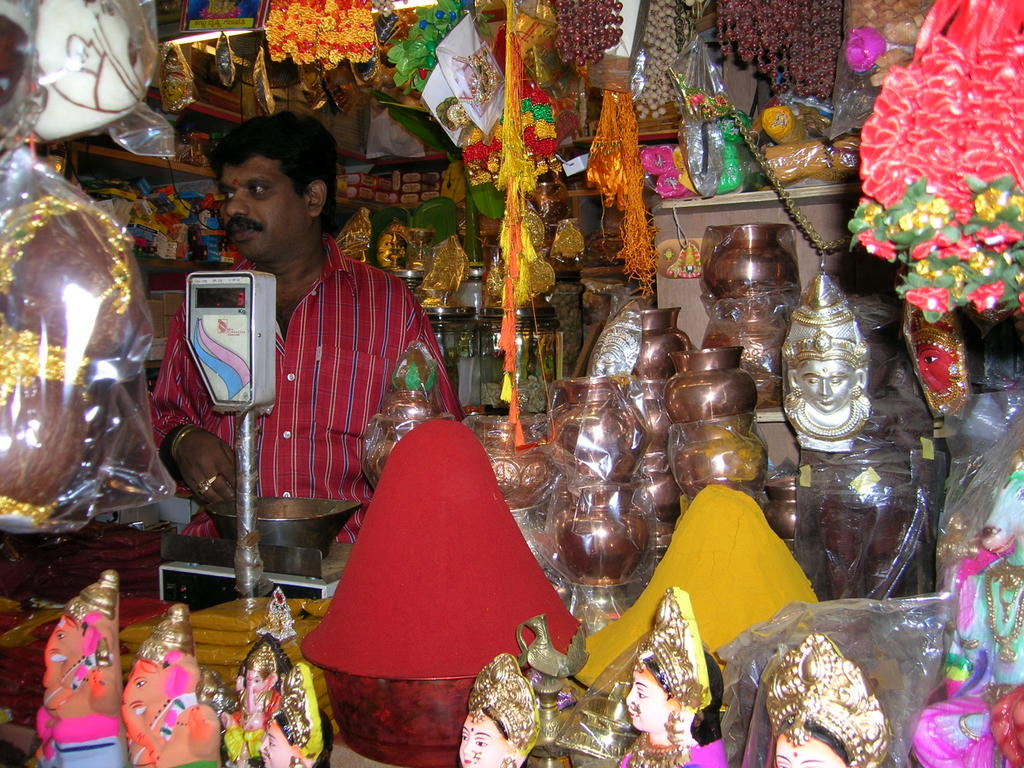
Open-air markets are incredibly addictive. Or may be it's just me. I could while away hours in a market, peeping into every store, inhaling the smells, chatting up the store owners, gawking at strange produce and buying some for later, tasting samples, soaking in the atmosphere - the colors, the flavors, the people, the chatter, the hustle and the bustle.


After spending all day or days in museums, monuments and anything else that might set a city apart from any other I've ever visited, all it takes is one visit to a market to realize that I may be in a different land but there are a lot more things that bind people than set them apart.


 ... in Nice ...
Markets offer you a glimpse into the soul of a city as no other feature can. It's where the locals hang out - and connect - to carry out mundane transactions; it has the stuff the locals buy for every day life - the onions to go in smabhar or sauce, the tomatoes to go in rasam or a salad, the apples or the kishmish that will be savored after dinner, the flowers that will adorn an idol or grace a dinner table that night. As you go about the business of picking what you want to buy and paying for your loot, it feels like you are being let in on a secret. For a time, however fleeting it may be, the city embraces you as one of its own. And that's a heady feeling.

P.S. The chef was hot! And check out that scooter! The noise matched its girth.
Having grown up in India, markets were always part of the equation, no matter where we lived. When we lived in Bangalore, my dad used to take me and my brother to any market we came upon on weekend jaunts that had no destination. The market at Jayanagar 4th block, K.R. Market, and the ones at Malleswaram 8th cross and 15th cross were regular haunts and were the supermarkets of old during festivals, stocking everything from sugarcane and yams for sankaranthi and pongal to idols for the Ganesha festival, Christmas trees and lights in December, plantain shoots and the pooja items for Hindu rituals.
 This boy on Bannerghatta Road in Bangalore saw the camera in my hand and posed with the two sugar cane shoots

When I left India many moons ago and landed in Philadelphia, after days of moping around, feeling lost and disoriented, I found my bearings in South Philly's Italian Market (I am eternally grateful to my then room mate for taking me there when she did). It had everything to assuage a lonely girl's homesickness.
Markets are also very handy when you are traveling to countries with unfamiliar cuisines or if you are rushing from one place to another with no time for a sit-down meal. We've called upon a variety of foods - from cherries, oranges, strawberries and baked goods and candies - bought in open-air markets as reinforcements in a pinch.

And sometimes, it's much more than the stuff for sale, delectable though they may be, that stays in your mind.


So the next time you're stuck in a strange city for a length of time, check out its market. You might not feel so lonely after all.
Thursday, August 16, 2007
Bangalore Service Providers
Here are three Bangalore service providers that I thought were very good at what they did.
1. Boutique Tailor: Sana Mohiuddin (Libasse on Airport Road - 9844104746) is a wonderful lady who has four or five tailors working under her. She has excellent ideas for chudidhars and blouses. She also beautifully decorated a shawl for me.
2. Coral Art Gallery: Art and photo framing, and art pieces. Contact Rajendra Dugar on (080) 2676 5920.
3. Govardhans in Jayanagar: Invitations design and printing. Call (080) 4121 0341.
1. Boutique Tailor: Sana Mohiuddin (Libasse on Airport Road - 9844104746) is a wonderful lady who has four or five tailors working under her. She has excellent ideas for chudidhars and blouses. She also beautifully decorated a shawl for me.
2. Coral Art Gallery: Art and photo framing, and art pieces. Contact Rajendra Dugar on (080) 2676 5920.
3. Govardhans in Jayanagar: Invitations design and printing. Call (080) 4121 0341.
Wednesday, August 15, 2007
Roland's HP-207 Digital Piano
I don't know a lot about all the cool stuff digital pianos enable you to do (and it is a lot), but I know enough to say that we are mighty pleased with the Roland Digital Piano (model HP-207) we acquired when we returned from India.
After the rather dismal experience we had trying to keep our old piano tuned and in condition in Bangalore, a piano that would never require tuning sounded appealing. That and the fact that digital pianos also allowed the pianist to experiment with varied instrument sounds propelled us toward a piano store that also sold digitals. Once there, the salesman promptly took us to the most expensive on the floor. We smashed his hopes - as gently as we could. Not only was it too expensive, it also had too many features that were not necessary for someone my son's age.
We saw a few more models on the floor, but the HP-207 seemed the most appropriate for our needs. The sound is awesome, the keys feel like and have the same weight as those of an acoustic piano. You can plug in headphones when you are practicing or lower the volume if you want to be quiet; you can play the drums or the guitar or the harpsichord (just a few of the more than 300 sounds promised by the manual); produce police car sounds or airplane sounds; you can record your own compositions; make use of the pre-recorded songs in the memory to learn new songs, etc., etc., etc. I'm sure there are a whole lot of other features my son has not discovered yet (the manual is hidden away safely for now).
We spent some time debating whether an instrument with all these features would be a distraction, but our son's teacher laid our doubts to rest. In his experience, having the other features (such as other instrument sounds or the ability to record a piece or a child's own composition and play back) on hand were valuable in the battle against boredom.
That observation has borne out. My son actually spends a lot more time at the piano than just practising his pieces - to fiddle with the settings, discover sounds, make up songs, etc. And it is a lot of fun to listen to all the different tunes wafting from a corner of the house.
After the rather dismal experience we had trying to keep our old piano tuned and in condition in Bangalore, a piano that would never require tuning sounded appealing. That and the fact that digital pianos also allowed the pianist to experiment with varied instrument sounds propelled us toward a piano store that also sold digitals. Once there, the salesman promptly took us to the most expensive on the floor. We smashed his hopes - as gently as we could. Not only was it too expensive, it also had too many features that were not necessary for someone my son's age.
We saw a few more models on the floor, but the HP-207 seemed the most appropriate for our needs. The sound is awesome, the keys feel like and have the same weight as those of an acoustic piano. You can plug in headphones when you are practicing or lower the volume if you want to be quiet; you can play the drums or the guitar or the harpsichord (just a few of the more than 300 sounds promised by the manual); produce police car sounds or airplane sounds; you can record your own compositions; make use of the pre-recorded songs in the memory to learn new songs, etc., etc., etc. I'm sure there are a whole lot of other features my son has not discovered yet (the manual is hidden away safely for now).
We spent some time debating whether an instrument with all these features would be a distraction, but our son's teacher laid our doubts to rest. In his experience, having the other features (such as other instrument sounds or the ability to record a piece or a child's own composition and play back) on hand were valuable in the battle against boredom.
That observation has borne out. My son actually spends a lot more time at the piano than just practising his pieces - to fiddle with the settings, discover sounds, make up songs, etc. And it is a lot of fun to listen to all the different tunes wafting from a corner of the house.
Keeping Geography Real
A neat way to kickstart interest in geography and to sustain it, I found, is to put up a wall map of the world or a map of the country you are in and mark each city your child has visited with a tiny sticker. It's mighty thrilling to see the excitement building in your child's face as you mark each city and the interest spreads to what's around that city and beyond.
Feroze Khan Chat on Washingtonpost.com
Sunday, August 12, 2007
At Virginia's Sky Meadows, One Step Closer to the Heavens
Last night, for the first time in all the years we've lived in the United States, we heard a cow moo.

A whole herd of cows grazed lazily on the patchy green and golden grass in the shadow of the Blue Ridge Mountains in a fenced-in enclosure. On our side of the fence, apple tree branches hung heavy with the weight of the fruit.

We could see a line of cars ahead of us as we entered Virginia's Sky Meadow State Park, about an hour west of Washington, D.C. The parking lot was already full and cars were now beginning to line the gravelly path skirting a grassy mound on which a young boy and girl were tossing a football to each other.
Just beyond them, we could barely see the tops of the backs of chairs and a few heads. Counting our lucky stars that we had a couple of portable folding chairs stashed in the trunk of the car, we found a parking spot, walked up the mound, past the football-throwing kids, and came upon a large field.

An assortment of groups - families, friends, couples - sprawled on sheets spread out on the grass and sat on chairs in the lower part of the field where the ground was level. In the middle, about fifteen telescopes stood on the ground - some slim and long and others fat and long - their sights trained on the skies. Their owners bustled about, connecting wires, setting up chairs and ladders, firing up computers and good-naturedly talking to curious children and adults alike.
More people came, with children, pets, blankets, picnic hampers and flashlights. As the sun dipped low over the horizon, the breeze picked up and a lone star appeared in the center of the pale blue sky. The show had begun.
Sky Meadows State Park is host to a cooperative program series put together by the Smithsonian Albert Einstein Planetarium, NASA/Jet Propulsion Lab Solar System Ambassadors and the Northern Virginia Astronomy Club. One moonless Saturday evening every month from April to November is reserved for this special event - a slide show presentation on a specific area of astronomy, a tour of the skies presented by a park official, topped off with telescope-hopping to take a peek at the skies.
As the last of the summer light faded out, more stars popped up in the huge inverted bowl above us - more stars than I had seen in a very long time. My son, his friend and I made our way to one of the telescopes, the kids' curiosity getting the better of their manners as they peeped into every part that looked even remotely like an eye-piece. The amateur astronomer to whom that telescope belonged guided the kids to the correct aperture and pointed them to that first star we'd seen that evening.
"Do you know what that is?"
"A star?"
"No, that's Jupiter."
"Jupiter? Wow! Can we see it through the telescope?"
"Of course."
Then a bit later, "Mom! I could see Jupiter with my naked eye!"
That set the flavor for the evening. Everything was coated in generous doses of excitement, the thrill of seeing something that had been only the stuff of books writ large on every one's faces. A fluffy band of cloud that stretched from one horizon into the other, we learned, was a band of the Milky Way.
The slide show presentation was educational and useful, drawing people into the evening's program and giving them pointers on what to look for later on in the skies. The volunteers of the Astronomy Club offered up their telescopes to long lines of grateful people, turning their telescopes at intervals to showcase new patches of sky. An occasional shooting star hurtling down the sky produced "oohs" and "aahs".
We wandered from one place to another - heads swiveling up to watch the skies and swiveling right back down to make sure we did not trip over anyone on the grass - trying to take in as much as we could. Then there were the people who picked a spot early in the evening and did not budge, their attention focused on the sky, just enjoying the giant, outdoor planetarium, their lasers pointing this way and that, calling out names of constellations, stars and planets.
Whatever you choose to do, at some point in the night, you are bound to revel in witnessing something way larger than yourself playing itself out in the skies - and develop a crick in your neck.
Trip Information:
- Three more Astronomy nights are planned for this year at Sky Meadows: September 8 (7:30 pm to 11:00 pm), October 13 (6:30 pm to 10:00 pm) and November 10 (5 pm to 10:00 pm).
- The park charges an admission fee of $4 per car. The show itself is free.
- The park is located at 11012 Edmonds Lane in Delaplane, Virginia, about an hour west of Washington, DC (66 W towards Front Royal, Exit 23 to US 17 N, Left on Edmonds Lane).
- Carry food (the closest food source is McDonald's 10 miles away), portable folding chairs or sheets to lay on the grass, a flashlight, warm clothing, and a telescope if you have one.
- Sky Meadows' website has information about other activities offered there (hiking, camping).
File Under "She'll Always Be My Baby"
Me: "Dad! We went parasailing. It was so much fun! All three of us went up together! Big N also had a lot of fun! We could see for miles and..."
My dad (sternly): "What were you wearing? A skirt or pants?"
My dad (sternly): "What were you wearing? A skirt or pants?"
Tuesday, August 07, 2007
Children's Book Review: Eats, Shoots & Leaves and The Girl's Like Spaghetti by Lynne Truss; Illustrated by Bonnie Timmons
In the introduction to her best-selling Eats, Shoots & Leaves (The Zero Tolerance Approach to Punctuation), Lynne Truss describes a "true stickler":
Now, sticklers (and teachers and parents) have two more reasons to rejoice. Last year, Truss authored a children's edition of Eats, Shoots & Leaves and, recently, its companion book, The Girl's Like Spaghetti.


Illustrated by Bonnie Timmons (who drew the cartoons for the popular television series, Caroline in the City), the two books are attractive, colorful and entertaining renditions of what happens to sentences when commas are missing or end up in the wrong places, or apostrophes appear where they shouldn't. Truss takes a sentence, punctuates it in two different ways and Timmons draws an image for each of the two variations illustrating the different meanings the sentences consequently take on.
For example, in Eats, Shoots & Leaves, the sentence, "Look at that huge hot dog!" appears first with no commas (accompanied by an illustration of a huge hot dog on a grill), and in the second instance, a single comma makes an appearance after the word "huge" to read, "Look at that huge, hot dog!" (and is accompanied by a drawing of a very big, white, spotted dog, panting near a kiddie pool).
This same example could have been written in prose with the consequences of the placement or omission of the comma explained in purely grammatical terms, but, as they say, a picture is worth a thousand words. What a delight it will be for teachers and parents to have this book, to flip to a page and be able to say to a child, "See what happens if you don't use a comma here?" or "See what happens if you put an apostrophe here instead of here?" The prospect of nipping bad punctuation habits in the bud (while the children are having a good time of it) will surely be welcome.
For those parents, teachers, curious youngsters or other readers wanting to know the grammatical explanations for the consequences of misplaced punctuation, there is a handy table at the end of the book that compares the two iterations of each sentence. To continue with the above example, in the version without the comma, "huge" modifies "hot dog", and in the version with the comma, "huge" and "hot" both modify the noun "dog". So, in the former, the sentence describes a hot dog, while in the latter, the sentence describes a dog.
The Girl's Like Spaghetti follows a similar pattern. One of the most common punctuation errors involving an apostrophe must be the use of "it's" for "its" and vice versa. As the table at the end of the book explains, "The apostrophe makes a contraction of it and is", while its (without the apostrophe) "is a possessive pronoun..." The illustration accompanying the example, "Look, it's behind." is that of a turtle falling behind in a race and "Look, its behind." is illustrated by a boy pointing to a horse's behind. Point made, and how!
As you flip through the pages and look at all the illustrations and examples, you may begin to wonder if children should be the only beneficiaries of these wonderful books, and most likely you will conclude, not. It is not unusual to come across several instances of misplaced, absent or overused punctuation in the course of a day (even in newspapers, sometimes) where the culprits are mostly us adults. These illustrated books might, in all probability, be more successful in driving home basic punctuation rules than most grammar texts have apparently hitherto achieved, and readers are bound to have more fun in the process (my seven year-old certainly did).
Eats, Shoots & Leaves and The Girl's Like Spaghetti are must-have additions not only to elementary school libraries, but to all libraries and book shelves everywhere.
Then, perhaps, sticklers the world over can give a rest to those Punctuation Repair Kits.
Websites to check out:
Lynne Truss
Bonnie Timmons
Eats, Shoots & Leaves
The Girl's Like Spaghetti
Save the Comma
For any true stickler, you see, the sight of the plural word "Book's" with an apostrophe in it will trigger a ghastly private emotional process similar to the stages of bereavement, though greatly accelerated.Anyone who has experienced similar distress at the sight of misplaced apostrophes, redundant or missing commas and overused semi-colons, and has felt the urge to fix the errors (on restaurant menus, billboards, brochures, fliers - you name it) is bound to empathize with Truss and delight at the sight of the "Punctuation Repair Kit" so thoughtfully included in Eats, Shoots & Leaves.
Now, sticklers (and teachers and parents) have two more reasons to rejoice. Last year, Truss authored a children's edition of Eats, Shoots & Leaves and, recently, its companion book, The Girl's Like Spaghetti.
Illustrated by Bonnie Timmons (who drew the cartoons for the popular television series, Caroline in the City), the two books are attractive, colorful and entertaining renditions of what happens to sentences when commas are missing or end up in the wrong places, or apostrophes appear where they shouldn't. Truss takes a sentence, punctuates it in two different ways and Timmons draws an image for each of the two variations illustrating the different meanings the sentences consequently take on.
For example, in Eats, Shoots & Leaves, the sentence, "Look at that huge hot dog!" appears first with no commas (accompanied by an illustration of a huge hot dog on a grill), and in the second instance, a single comma makes an appearance after the word "huge" to read, "Look at that huge, hot dog!" (and is accompanied by a drawing of a very big, white, spotted dog, panting near a kiddie pool).
This same example could have been written in prose with the consequences of the placement or omission of the comma explained in purely grammatical terms, but, as they say, a picture is worth a thousand words. What a delight it will be for teachers and parents to have this book, to flip to a page and be able to say to a child, "See what happens if you don't use a comma here?" or "See what happens if you put an apostrophe here instead of here?" The prospect of nipping bad punctuation habits in the bud (while the children are having a good time of it) will surely be welcome.
For those parents, teachers, curious youngsters or other readers wanting to know the grammatical explanations for the consequences of misplaced punctuation, there is a handy table at the end of the book that compares the two iterations of each sentence. To continue with the above example, in the version without the comma, "huge" modifies "hot dog", and in the version with the comma, "huge" and "hot" both modify the noun "dog". So, in the former, the sentence describes a hot dog, while in the latter, the sentence describes a dog.
The Girl's Like Spaghetti follows a similar pattern. One of the most common punctuation errors involving an apostrophe must be the use of "it's" for "its" and vice versa. As the table at the end of the book explains, "The apostrophe makes a contraction of it and is", while its (without the apostrophe) "is a possessive pronoun..." The illustration accompanying the example, "Look, it's behind." is that of a turtle falling behind in a race and "Look, its behind." is illustrated by a boy pointing to a horse's behind. Point made, and how!
As you flip through the pages and look at all the illustrations and examples, you may begin to wonder if children should be the only beneficiaries of these wonderful books, and most likely you will conclude, not. It is not unusual to come across several instances of misplaced, absent or overused punctuation in the course of a day (even in newspapers, sometimes) where the culprits are mostly us adults. These illustrated books might, in all probability, be more successful in driving home basic punctuation rules than most grammar texts have apparently hitherto achieved, and readers are bound to have more fun in the process (my seven year-old certainly did).
Eats, Shoots & Leaves and The Girl's Like Spaghetti are must-have additions not only to elementary school libraries, but to all libraries and book shelves everywhere.
Then, perhaps, sticklers the world over can give a rest to those Punctuation Repair Kits.
Websites to check out:
Lynne Truss
Bonnie Timmons
Eats, Shoots & Leaves
The Girl's Like Spaghetti
Save the Comma
Monday, July 23, 2007
Olivia Aull, Swimming and Community
I had written a few days ago about the swimming league my son belongs to.
Today, in the Washington Post, Donna St. George writes about Olivia Aull, a 14-year old swimmer with one of the teams in the Northern Virginia Swimming League, who died on July 11 in a car crash while on her way to swimming practice.
Please do read the entire article.
Today, in the Washington Post, Donna St. George writes about Olivia Aull, a 14-year old swimmer with one of the teams in the Northern Virginia Swimming League, who died on July 11 in a car crash while on her way to swimming practice.
The teenager was buried this past Monday after a service that drew more than 400 people. Everyone was then invited to a reception at the Aull home, where swim families worked with friends and neighbors to organize food, drinks, tables, chairs and tents. The group set it up, cleaned it up, then drove away with 20 bags of garbage.
Olivia's death came amid the summer season, when swimmers are at the pool almost daily, not only for practice and meets, but also for Friday pep rallies, pasta dinners and movie nights. For six or eight weeks, swimming can become more than a sport. It can become a way of life.
Word of the tragedy spread quickly. In Olivia's memory, several Virginia teams have donated to a scholarship fund administered by the Northern Virginia Swimming League.
At meets the day Olivia died, teams from 18 divisions honored her with moments of silence. Afterward, at 10 p.m., her summer pool held a vigil that drew 300 to 400 mourners. One parent brought hundreds of candles from her church. "It struck me that Olivia had 500 best friends," said Maureen Choudhury, a close family friend.
Three days later, when the Greenbriar team competed again, its opponents from Dunn Loring decorated a banner in Olivia's memory and wore green memorial ribbons on their shirts.
When it was Olivia's turn to swim that day, her team left the lane open to honor the missing swimmer. Everyone stood and clapped for the race, which was won by Olivia's close friend Kacey Norwood.
Please do read the entire article.
Friday, July 20, 2007
Traditional Baby Baths in India: A Community Affair
Lady N had the largest kumkum in the brightest shade of red I had ever seen on any one's forehead. It was at least one and a half times the size of a 50 paisa coin. Her heavily oiled hair was always combed back severely in a bun at the back of her head. Her sari, almost always some shade of green, was draped in the nine-yard style, with no petticoat and the folds going front to back between her calves, pant-style. Her eyes were heavily lined with kaadige (kaajal). Huge diamond studs adorned ears and nose. Her hands and legs were soft and wrinkly, the soles of her feet cracked from walking barefoot.
To me, Lady N was larger than life.
A dear friend of my maternal grandmother, Lady N was probably well into her sixties when I first met her as a five year-old. She had the courage and the confidence to do what even my grandmother, a lady of formidable capabilities herself, would not do. She bathed newborn babies.
This was not uncommon in most households - one or two ladies in the community would help out families with newborns with the bathing. Even today this practice is quite prevalent, particularly in the rural areas.
My earliest memory is of Lady N arriving every day in the middle of the morning at my grandmother's house in Mysore to bathe my new baby brother and then my cousins. She would come with a small cloth bag in her hand containing a bottle with a special blend of four oils which she would use to massage the baby, and a soft cotton saree which she would change into before handling the baby. Prior to her arrival, my grandmother would have the rest of the paraphernalia ready - hot (and I mean hot) water, corn flour, baby powder, powdered saambhrani, some coal, a small, round wicker basket and kaadige, a small spot of which would go on the baby's cheek and forehead to "ward off the evil eye".
After thoroughly massaging the baby for about half an hour (by which time the baby would either be bawling or getting ready to fall into a state of stupor depending on your luck), he would be taken to the smoky, steamy, slightly aromatic bathroom off of the kitchen in the back of the house.
The bathroom, made entirely of stone, brick and cement, was huge by today's standards. At the top left corner of the bathroom was a square protrusion from the wall made of concrete, about five feet by five feet. It contained a huge metal bowl within it which would be filled with water and heated from the bottom by a wood-burning fire. At the top right corner was a section of the bathroom lower than the rest by about two feet with a stone floor reserved for bathing.
Lady N would sit on this stone floor with her back to the wall and her legs stretched out together in front of her and receive the baby from my grandmother. The baby would go face down, head facing Lady N's feet and Lady N would start pouring water over the baby's body. With sure arms, Lady N would wash off the oil with a mixture of the corn flour and water, flipping the baby deftly from his front on to his back. Torso first, then arms and legs, then the face and finally the head.
Washing the hair is always the tricky part, especially with a newborn because, obviously, the neck is not strong yet and needs to be supported at all times. With her palm elongated to form a visor and the forehead secured in the crook of her palm between her thumb and forefinger of her right hand, Lady N would pour water on the baby's head with the left. One hand supporting, one hand scrubbing and washing. As a final act, Lady N would scoop up a container full of water, move her arms around in a circular motion in front of the baby three times and pour the water on to the bathroom floor, again to ward off the evil eye.
The actual bath only lasts a few minutes and the baby would then be handed over to my grandmother to be towelled off. Lady N would change back into her dry clothes in the meantime and would settle down on the floor of the "hall", one of the main rooms of the house to dry the baby's body and hair with the saambhrani.
Saambhrani is a fragrant material which when burnt on coal gives off aromatic smoke. The wicker basket would go over a plate of burning coal with the saambhrani sprinkled on top. The baby would be held with both arms over the basket and slowly moved back and forth. The warm smoke would swirl around the baby, warming the baby's body and hair and drying up any remaining pockets of dampness that the towel had left untouched.
Then, voilà! A clean, fragrant, hopefully extremely sleepy baby would be handed off to the mother.
Many years later, my mother came to the US when Big N was born. All the baby books showed pictures of babies being bathed in the kitchen sink. In the kitchen sink! Having come from a culture where there were at least three people hovering over the baby during bath-time, what a let down that was for my mother.
But she rose to the occasion. Never having bathed a newborn before, she swallowed all her fears and trepidations and stepped into a super smooth jacuzzi to bathe her first grandchild. Step by step, she tried to recall Lady N's motions, deriving comfort from her confidence although Lady N was long dead by then. It was heartbreaking and inspiring to see my mother trying so hard to learn something so totally new in such a stressful situation. By the end of the first week, she was actually good at it.
She had carried dhoop sticks (not the incense sticks - these were thick and about a forefinger long), the new-fangled substitute for saambhrani, with her all the way from India, but there was no sitting in the "hall" or in any other room in the house. There were smoke alarms to consider. So off we went into the garage, the poor baby! It was too cold to carry him out with no clothes on, so it was only his hair that got the dhoop treatment.
These days, with no grandmothers in sight, these are the implements I resort to to give Little N a bath:

A reclining bathing seat made entirely of plastic. A far cry from a grandmother's lap, for sure.

A mug with a soft rubbery edge that wraps around the forehead so all the water falls back on the baby's head and not over her face. It doesn't work very well, actually. The baby's head needs to be tipped back and held there, which is uncomfortable for her neck, I feel. It might work better on older children.
The only feature of Lady N's bath ritual that is left standing is the mug full of water circulated three times in front of Little N's face and poured down the drain. It's not much but it's comforting enough.
To me, Lady N was larger than life.
A dear friend of my maternal grandmother, Lady N was probably well into her sixties when I first met her as a five year-old. She had the courage and the confidence to do what even my grandmother, a lady of formidable capabilities herself, would not do. She bathed newborn babies.
This was not uncommon in most households - one or two ladies in the community would help out families with newborns with the bathing. Even today this practice is quite prevalent, particularly in the rural areas.
My earliest memory is of Lady N arriving every day in the middle of the morning at my grandmother's house in Mysore to bathe my new baby brother and then my cousins. She would come with a small cloth bag in her hand containing a bottle with a special blend of four oils which she would use to massage the baby, and a soft cotton saree which she would change into before handling the baby. Prior to her arrival, my grandmother would have the rest of the paraphernalia ready - hot (and I mean hot) water, corn flour, baby powder, powdered saambhrani, some coal, a small, round wicker basket and kaadige, a small spot of which would go on the baby's cheek and forehead to "ward off the evil eye".
After thoroughly massaging the baby for about half an hour (by which time the baby would either be bawling or getting ready to fall into a state of stupor depending on your luck), he would be taken to the smoky, steamy, slightly aromatic bathroom off of the kitchen in the back of the house.
The bathroom, made entirely of stone, brick and cement, was huge by today's standards. At the top left corner of the bathroom was a square protrusion from the wall made of concrete, about five feet by five feet. It contained a huge metal bowl within it which would be filled with water and heated from the bottom by a wood-burning fire. At the top right corner was a section of the bathroom lower than the rest by about two feet with a stone floor reserved for bathing.
Lady N would sit on this stone floor with her back to the wall and her legs stretched out together in front of her and receive the baby from my grandmother. The baby would go face down, head facing Lady N's feet and Lady N would start pouring water over the baby's body. With sure arms, Lady N would wash off the oil with a mixture of the corn flour and water, flipping the baby deftly from his front on to his back. Torso first, then arms and legs, then the face and finally the head.
Washing the hair is always the tricky part, especially with a newborn because, obviously, the neck is not strong yet and needs to be supported at all times. With her palm elongated to form a visor and the forehead secured in the crook of her palm between her thumb and forefinger of her right hand, Lady N would pour water on the baby's head with the left. One hand supporting, one hand scrubbing and washing. As a final act, Lady N would scoop up a container full of water, move her arms around in a circular motion in front of the baby three times and pour the water on to the bathroom floor, again to ward off the evil eye.
The actual bath only lasts a few minutes and the baby would then be handed over to my grandmother to be towelled off. Lady N would change back into her dry clothes in the meantime and would settle down on the floor of the "hall", one of the main rooms of the house to dry the baby's body and hair with the saambhrani.
Saambhrani is a fragrant material which when burnt on coal gives off aromatic smoke. The wicker basket would go over a plate of burning coal with the saambhrani sprinkled on top. The baby would be held with both arms over the basket and slowly moved back and forth. The warm smoke would swirl around the baby, warming the baby's body and hair and drying up any remaining pockets of dampness that the towel had left untouched.
Then, voilà! A clean, fragrant, hopefully extremely sleepy baby would be handed off to the mother.
Many years later, my mother came to the US when Big N was born. All the baby books showed pictures of babies being bathed in the kitchen sink. In the kitchen sink! Having come from a culture where there were at least three people hovering over the baby during bath-time, what a let down that was for my mother.
But she rose to the occasion. Never having bathed a newborn before, she swallowed all her fears and trepidations and stepped into a super smooth jacuzzi to bathe her first grandchild. Step by step, she tried to recall Lady N's motions, deriving comfort from her confidence although Lady N was long dead by then. It was heartbreaking and inspiring to see my mother trying so hard to learn something so totally new in such a stressful situation. By the end of the first week, she was actually good at it.
She had carried dhoop sticks (not the incense sticks - these were thick and about a forefinger long), the new-fangled substitute for saambhrani, with her all the way from India, but there was no sitting in the "hall" or in any other room in the house. There were smoke alarms to consider. So off we went into the garage, the poor baby! It was too cold to carry him out with no clothes on, so it was only his hair that got the dhoop treatment.
These days, with no grandmothers in sight, these are the implements I resort to to give Little N a bath:
A reclining bathing seat made entirely of plastic. A far cry from a grandmother's lap, for sure.
A mug with a soft rubbery edge that wraps around the forehead so all the water falls back on the baby's head and not over her face. It doesn't work very well, actually. The baby's head needs to be tipped back and held there, which is uncomfortable for her neck, I feel. It might work better on older children.
The only feature of Lady N's bath ritual that is left standing is the mug full of water circulated three times in front of Little N's face and poured down the drain. It's not much but it's comforting enough.
Swim Teams in Bangalore
For those who are looking for information on swim teams in Bangalore:
The pool in Basavanagudi has very good coaches and the swimmers there regularly compete in state and national competitions. You should be able to obtain their mumber by calling directory assistance in Bangalore at 23333333.
Good luck.
The pool in Basavanagudi has very good coaches and the swimmers there regularly compete in state and national competitions. You should be able to obtain their mumber by calling directory assistance in Bangalore at 23333333.
Good luck.
Thursday, July 19, 2007
Photo Essay: Bangkok
Everyone told us Bangkok would be beautiful. Modern. Developed. Great for shopping. The roads would be great. The airport would be fantastic. We rolled our eyes and said, Yeah, yeah, yeah. The image of Bangkok as a third-world city would not be dislodged from our heads.
Until we came out of the walkway leading from our plane and stepped into the airport. With wide eyes, gaping mouths and short breaths, we took it all in. The cleanliness. The modernity. The space. The airiness. The convenience. The air of prosperity. The efficiency at the immigration counter. The orderly baggage claim area. We landed on a Saturday, perhaps it was just the weekend lull. But still.
A ride into the city did nothing to dispel any of these initial reactions. The roads were great. The buildings were well-maintained. The glass facades of the offices and malls shone with brilliance. It was like driving in some European city.
There was, however, plenty of evidence that we were, in fact, in Thailand.

Right around the corner from our hotel, street vendors sell tender coconuts. The green outer layer is shaved off and the unopened coconuts are stored in an ice box of sorts.

I thought that Pushkar was the only place in the whole world with a Brahma temple. Not so, as we found out in Bangkok. This shrine to Brahma is apparently very popular with anyone who has a favor to ask of God. The shrine occupies the corner of a busy intersection, right next to the Grand Hyatt Erawan. The story behind the location of the temple is that the hotel's renovation was not going very well and it was suggested to the management that they build a shrine to Brahma next to the hotel. The shrine was duly built and legend has it that the construction of the temple proceeded smoothly from that point on. And if you did not know, Erawan is Brahma's elephant.

Flowers for sale next to the Brahma shrine. These shops also had incense sticks. If you duly noted the Subway sign, we did too and promptly headed there for lunch.

I love markets. The most enjoyable part of a trip for me is to stroll through the market in any new city. I love the hustle and bustle, looking at the wares for sale, the color, the people, the haggling, the sameness of the foods that we all eat, and the differences. And it also makes me feel, for half an hour at least, like a local.

The Night Market is one of Bangkok's great attractions (please to banish all naughty thoughts from thy head), an open-air shopping mecca for tourists and locals alike. The market is definitely worth a visit. The prices are very reasonable and you may make a great find for your home or your closet in its maze-like corridors.
After dinner on the first day of our Bangkok stay, we flagged down a tuk-tuk and scrambled in. After the unavoidable haggling over the rate, the driver wiggled in his seat, settled himself in and tore through the Bangkok night. Tuk-tuk is a misnomer. The name apparently originated in the sound of the engines of the the original vehicles. The one we rode in and the other ones we saw on the streets were souped up versions (with myriad multi-colored flashing lights) and sounded more like planes taking off. Big N loved it, of course, and little N, safely ensconced in her father's arms was bewildered by the noise at first and then settled back to enjoy the ride.

The next morning, we hired a local guide for a half-day tour of the important sights. Our first stop was the Reclining Buddha temple.


The Emerald Buddha temple adjacent to the Royal Palace was a sight to see. The sprawling temple complex houses many shrines with intricate design.


Lastly, Thai food was all that it is chalked up to be. We were big fans of Thai food, but as with Chinese food (which adapts to each country it is found in) we were afraid that we would be disappointed by the real deal. Happily, the Erawan Tea Room at the Grand Hyatt dispelled our apprehensions. The food was excellent.

One last thing. All of the display of prosperity that is evident to a visitor's eyes has come at a price. Our guide told us that beyond the few square kilometers of Bangkok city proper, poverty is all too prevalent in the rest of the country. We were surprised by what appeared to be the non-existence of slums or shanties in Bangkok, but we soon realized that that was only an illusion as we drove from the Grand Palace back to our hotel. Very close to the King's official residence, rows and rows of slum dwellings became visible.
Similarly, the construction of magnificent Suvarnabhoomi International Airport was beset by allegations of corruption on the part of the government resulting in a coup in September 2006 during which the Royal Thai Army overthrew the then Prime Minister. When we visited Bangkok in April 2007, the coup was still in place.
There are reports of unrest and violence on and off in Thailand (there was a bomb blast in Bangkok this past New Year's Eve), mostly confined to the southern areas, so it's worthwhile checking the latest reports as you plan your trip.
Until we came out of the walkway leading from our plane and stepped into the airport. With wide eyes, gaping mouths and short breaths, we took it all in. The cleanliness. The modernity. The space. The airiness. The convenience. The air of prosperity. The efficiency at the immigration counter. The orderly baggage claim area. We landed on a Saturday, perhaps it was just the weekend lull. But still.
A ride into the city did nothing to dispel any of these initial reactions. The roads were great. The buildings were well-maintained. The glass facades of the offices and malls shone with brilliance. It was like driving in some European city.
There was, however, plenty of evidence that we were, in fact, in Thailand.
Right around the corner from our hotel, street vendors sell tender coconuts. The green outer layer is shaved off and the unopened coconuts are stored in an ice box of sorts.
I thought that Pushkar was the only place in the whole world with a Brahma temple. Not so, as we found out in Bangkok. This shrine to Brahma is apparently very popular with anyone who has a favor to ask of God. The shrine occupies the corner of a busy intersection, right next to the Grand Hyatt Erawan. The story behind the location of the temple is that the hotel's renovation was not going very well and it was suggested to the management that they build a shrine to Brahma next to the hotel. The shrine was duly built and legend has it that the construction of the temple proceeded smoothly from that point on. And if you did not know, Erawan is Brahma's elephant.
Flowers for sale next to the Brahma shrine. These shops also had incense sticks. If you duly noted the Subway sign, we did too and promptly headed there for lunch.
I love markets. The most enjoyable part of a trip for me is to stroll through the market in any new city. I love the hustle and bustle, looking at the wares for sale, the color, the people, the haggling, the sameness of the foods that we all eat, and the differences. And it also makes me feel, for half an hour at least, like a local.
The Night Market is one of Bangkok's great attractions (please to banish all naughty thoughts from thy head), an open-air shopping mecca for tourists and locals alike. The market is definitely worth a visit. The prices are very reasonable and you may make a great find for your home or your closet in its maze-like corridors.
After dinner on the first day of our Bangkok stay, we flagged down a tuk-tuk and scrambled in. After the unavoidable haggling over the rate, the driver wiggled in his seat, settled himself in and tore through the Bangkok night. Tuk-tuk is a misnomer. The name apparently originated in the sound of the engines of the the original vehicles. The one we rode in and the other ones we saw on the streets were souped up versions (with myriad multi-colored flashing lights) and sounded more like planes taking off. Big N loved it, of course, and little N, safely ensconced in her father's arms was bewildered by the noise at first and then settled back to enjoy the ride.
The next morning, we hired a local guide for a half-day tour of the important sights. Our first stop was the Reclining Buddha temple.
The Emerald Buddha temple adjacent to the Royal Palace was a sight to see. The sprawling temple complex houses many shrines with intricate design.
Lastly, Thai food was all that it is chalked up to be. We were big fans of Thai food, but as with Chinese food (which adapts to each country it is found in) we were afraid that we would be disappointed by the real deal. Happily, the Erawan Tea Room at the Grand Hyatt dispelled our apprehensions. The food was excellent.
One last thing. All of the display of prosperity that is evident to a visitor's eyes has come at a price. Our guide told us that beyond the few square kilometers of Bangkok city proper, poverty is all too prevalent in the rest of the country. We were surprised by what appeared to be the non-existence of slums or shanties in Bangkok, but we soon realized that that was only an illusion as we drove from the Grand Palace back to our hotel. Very close to the King's official residence, rows and rows of slum dwellings became visible.
Similarly, the construction of magnificent Suvarnabhoomi International Airport was beset by allegations of corruption on the part of the government resulting in a coup in September 2006 during which the Royal Thai Army overthrew the then Prime Minister. When we visited Bangkok in April 2007, the coup was still in place.
There are reports of unrest and violence on and off in Thailand (there was a bomb blast in Bangkok this past New Year's Eve), mostly confined to the southern areas, so it's worthwhile checking the latest reports as you plan your trip.
Subscribe to:
Posts (Atom)